


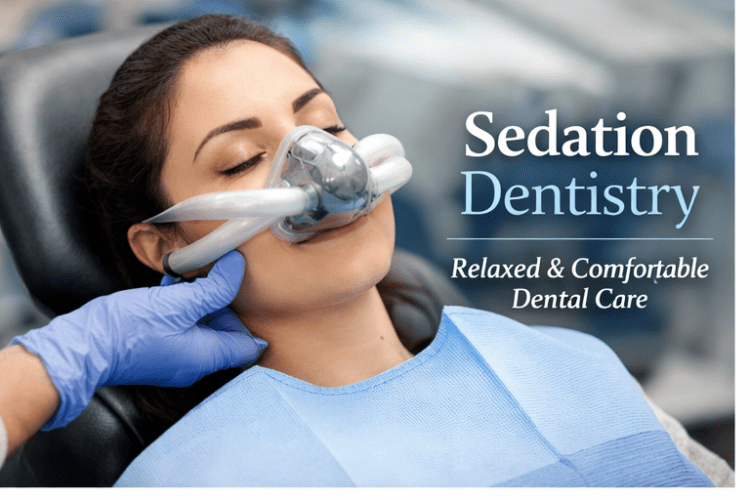
Sleep (Sedation) Dentistry
Moderate Sedation & General Anesthesia Dentistry
Now Offered at Our Clinic
Moderate Sedation & General Anesthesia Dentistry
Now Offered at Our Clinic
Some patients delay dental care because of anxiety, a sensitive gag reflex, difficulty getting numb, or the need for extensive treatment. We’re now offering Moderate Sedation and General Anesthesia (GA) options to help patients receive the care they need in a more comfortable and controlled way.
What is Moderate Sedation?
Moderate sedation (sometimes called “conscious sedation”) is designed to help you feel deeply relaxed and calm during treatment. Most patients feel drowsy, less aware of time, and have limited memory of the appointment—while still being able to respond to verbal cues.
Common reasons patients choose moderate sedation:
- Dental anxiety or fear
- Strong gag reflex
- Difficulty sitting through longer appointments
- Extensive treatment planned in one visit
- Past challenging dental experiences
What is General Anesthesia (Being Fully Asleep)?
General anesthesia is the deepest level of anesthesia, where you are completely asleep and unaware during treatment.
We are now offering General Anesthesia in collaboration with a licensed Anesthesiologist, providing eligible patients the option of being fully asleep for their dental care. This approach can be ideal for complex treatment plans, significant anxiety, or situations where treatment cannot be safely or comfortably completed with local anesthetic or sedation alone.
During GA:
- Your vital signs are continuously monitored
- You remain fully asleep throughout the procedure
- You will require a responsible adult escort and post-op supervision
Safety note: Your suitability for moderate sedation or general anesthesia will be determined through a comprehensive medical history review and a consultation. Not every patient is a candidate, and the safest option will always be recommended.
Advanced Dentistry
High Quality Equipment
Comfortable Office
Friendly Staff
Who Might Be a Good Candidate?
Moderate Sedation may be right for patients who:
- Feel anxious or fearful about dental treatment
- Need multiple procedures and prefer fewer visits
- Have difficulty tolerating dental treatment while awake
- Have a sensitive gag reflex (mild to moderate)
- Have had difficulty with freezing or dental discomfort in the past
General Anesthesia may be right for patients who:
- Have severe dental anxiety or phobia
- Require extensive or complex dental treatment
- Cannot tolerate treatment awake (even with sedation)
- Have special healthcare needs or behavioral challenges that make treatment difficult while awake
- Need treatment where immobility and comfort are essential for safety and efficiency
Important: Some medical conditions, medications, or airway considerations may affect eligibility. We’ll review all relevant history and, if needed, coordinate with your physician/specialists.


What to Expect
- Consultation & Assessment
We review your dental needs, anxiety level, medical history, medications, and prior anesthesia/sedation experiences. - Personalized Treatment Plan
We recommend the safest approach—local anesthetic alone, moderate sedation, or general anesthesia. - Day-of Instructions
You’ll receive clear pre-op instructions (including fasting guidance when indicated), and you’ll need a responsible adult to accompany you for sedation/GA appointments. - Procedure & Monitoring
Your safety is the priority. Appropriate monitoring is used throughout, and you’ll be given post-op instructions for recovery at home.
Questions & Answers (Q&A)
A: Moderate sedation helps you feel very relaxed and drowsy, but you can still respond when spoken to. General anesthesia means you are fully asleep and unaware throughout the procedure.
Comfort is central to both options. Local anesthetic (“freezing”) is typically used as needed, and sedation/GA helps reduce anxiety and awareness. We tailor the approach to your treatment plan and comfort level.
Many patients under moderate sedation report little or no memory of the appointment. With general anesthesia, you are fully asleep and will not be aware of the procedure.
When appropriately selected and performed with proper screening and monitoring, these options are commonly used and can be safe. That said, every medical procedure carries some risk, which is why we complete a thorough assessment and follow strict safety protocols.
ome patients may not be eligible due to certain medical conditions, medications, pregnancy, airway concerns, or recent illness. If sedation or GA isn’t ideal, we’ll discuss alternatives to keep your care safe and comfortable.
Yes. For moderate sedation and general anesthesia, you must have a responsible adult escort to bring you to the appointment, take you home, and stay with you afterward as instructed.
You’ll receive specific instructions before your appointment. These may include fasting guidelines (especially for GA), medication instructions, and what to expect on the day of treatment.
Usually not. Sedation and GA can cause lingering drowsiness. Plan to rest for the remainder of the day and follow your post-op instructions carefully.